Why Vietnam PTSD still deserves serious treatment, decades later
I have worked with Vietnam veterans who spent close to fifty years believing their symptoms were simply who they were now, not something treatable. That belief is understandable given the history, and it is also something I want to gently push back against every time it shows up in my office, because it keeps people from a kind of relief that is still fully available to them.
In case you are new here, I am Richard De La Garza, offering therapy for veterans and helping veterans and military connected individuals, across every generation of service, navigate the transition from survival to leadership with dialogue centered, trauma informed care. This is not a topic I approach only from clinical training. I have sat across from men in their seventies and eighties who are only now, for the first time, saying certain things out loud, and I want to explain why that timing makes complete sense given what this generation actually went through when they came home.
Why Vietnam PTSD has a different history than more recent combat trauma
PTSD was not officially recognized as a diagnosis until 1980, years after most Vietnam veterans had already come home. Before that, what we now understand clinically was often dismissed, minimized, or mislabeled entirely, sometimes as a character issue rather than a documented response to what a person had lived through.
A homecoming that made things harder, not easier
Unlike veterans of earlier wars, many Vietnam veterans returned to a country that met them with indifference or open hostility rather than support. That reception mattered. Trauma processed in a supportive environment tends to resolve differently than trauma processed in isolation or shame, and too many Vietnam veterans were denied that supportive environment entirely. Some describe being told, directly or indirectly, to simply not talk about what they had experienced, which taught an entire generation to bury their experience rather than process it.
The nature of the war itself
Guerrilla warfare, unclear front lines, and constant unpredictability created a different kind of chronic threat than more conventional combat. That unpredictability often produces a particular kind of hypervigilance, one that does not fade simply because the war itself ended decades ago. There was rarely a clear front line to return from, which meant the sense of danger did not have an obvious boundary where it was supposed to end, and that ambiguity has stayed with many veterans long after the physical distance from Vietnam grew into decades.
Why symptoms can persist and even resurface after decades
An estimated sevenf Vietnam theater veterans still experience PTSD today. That number surprises people who assume trauma symptoms should have faded by now. They do not automatically fade, and in some cases they resurface later in life with an intensity that feels entirely new, even though the underlying material has been there all along.
Retirement and other transitions can reopen old material
Structure and routine can suppress trauma symptoms for years without resolving them. Retirement, the loss of a spouse, or a health crisis can strip away that structure and bring symptoms back to the surface with an intensity that catches the veteran completely off guard. A demanding career or a busy family life can function almost like a container, and when that container empties out later in life, whatever it was holding back tends to resurface without much warning.
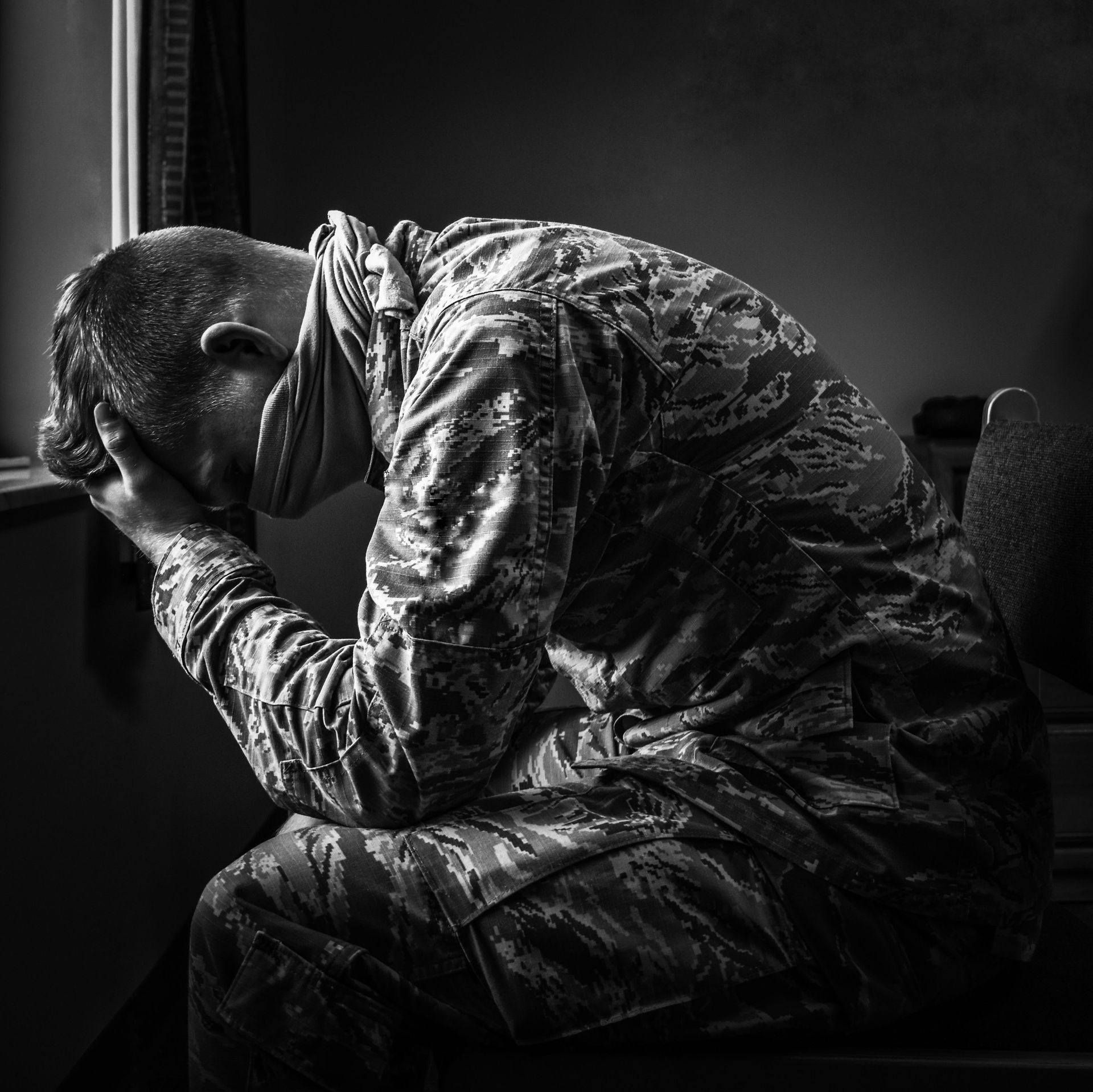
This is not a sign of failure or weakness
A veteran who managed for forty years and is now struggling has not failed at anything. The underlying trauma was often simply unaddressed, not resolved, and life circumstances changing enough to remove the coping structure that had been holding things together is common, not rare. I try to make this point clearly and early in our work, because so many older veterans arrive carrying a private shame about "falling apart now" after decades of apparent stability.
Families are often carrying this alongside the veteran
Spouses and adult children of Vietnam veterans frequently describe a lifetime of adjusting around unexplained silences, sudden withdrawals, or a temper that never quite made sense to them. When a veteran finally begins treatment, family members sometimes need their own space to process decades of living alongside symptoms nobody had a name for at the time. Some families find it helpful to pair that individual work with outside community support, like veteran support groups, so they are not carrying the adjustment entirely on their own, or with a resource built specifically for partners, like therapy for military spouses. I make room for that conversation when it is relevant, because the family has usually been managing this trauma's effects for just as long as the veteran has.
What treatment looks like for a veteran carrying this for decades
Treating decades-old trauma is different from treating trauma from a recent deployment, and it requires a different kind of patience and respect for how long this person has been carrying it alone.
Respecting what already worked, without assuming it was enough
Many Vietnam veterans built their own coping systems long before modern trauma treatment existed, because no formal system was available to them. I start by respecting what has actually kept this person functioning for decades, rather than dismissing it as inadequate simply because it was not clinical. Some of what they built on their own, work ethic, routine, humor, deserves real credit even as we also address what those systems could not fully resolve.
Evidence-based trauma therapy, adapted for a longer timeline
Modern trauma-informed approaches work for veterans regardless of how long ago the trauma occurred. The clinical principles are the same as for a veteran of a more recent conflict. What changes is the pacing, and the respect for decades of self-taught coping that deserve acknowledgment rather than replacement. There is no expiration date on trauma treatment being effective, whatever a client may have assumed for fifty years, and I have watched clients experience genuine relief in their seventies that they had long since stopped expecting was still possible.
Addressing shame that built up over fifty years, not just the original trauma
Decades of feeling dismissed or unseen often create a second layer of shame on top of the original trauma. Treatment has to address both layers, not just the combat experience itself, because the shame layer often causes as much daily suffering as the original memory. In some cases, the shame about how they were treated on return has done more ongoing damage than the original combat experience, and it deserves just as much direct attention in treatment.
Why dialogue matters even more for this generation
Vietnam veterans were, in many cases, denied dialogue entirely when they came home. Nobody asked what they had seen. Nobody wanted to hear it. That absence shaped how this generation learned to carry their experience, often building a lifetime habit of silence that becomes its own obstacle in treatment decades later.
Naming what happened without demanding it be relived in detail
Effective treatment does not require reliving every detail of combat to be effective. It requires naming what happened honestly enough that the nervous system can finally stop treating it as an active threat. For a client who has spent fifty years never speaking certain sentences out loud, simply being able to say them in a room where someone is actually listening carries its own weight, independent of any specific technique, and that weight alone often does more for a person than any single clinical intervention.
Building a plan for the years still ahead, not just processing the past
Treatment for a veteran later in life is not only about the past. It is also about building a plan for a version of the years ahead that is not organized entirely around avoidance and hypervigilance. Some veterans in this generation find that body-based options, like therapeutic horseback riding, become part of that plan alongside ongoing talk therapy. Whatever years remain deserve to be lived without the same old alarm system quietly running in the background of every family gathering, every quiet evening, every ordinary moment that used to feel unsafe for reasons that were never fully explained.
How this fits into a broader approach to trauma
My trauma therapy practice does not treat a Vietnam veteran's experience as a footnote to more recent conflicts. It is its own history, with its own particular wounds, and it deserves treatment built around that history specifically, not simply adapted from protocols designed with a younger generation of veterans in mind.
It's not too late to feel steady again
If you are a Vietnam veteran who has carried this for decades, or you love someone who has, it is not too late to address it, and the length of time it has gone untreated does not make treatment any less possible now. Fifty years of carrying something alone is a long time, and it deserves to be met with patience rather than urgency, though the decision to start does not have to wait any longer.
I help veterans of every era work through trauma with an approach built on dialogue, respect, and patience for however long it has been carried. My trauma therapy practice meets you at whatever point in this journey you are standing, whether that is the very beginning of ever naming this out loud, or a return to work you started decades ago and never finished.
I work with clients in and around San Diego, San Marcos, and Los Angeles, and virtually as well, and I am honored every time a veteran of this generation trusts me with a story they have carried alone for so long. Book your consultation today.
Hi, I’m Dr. Richard de la Garza
I specialize in liberation-rooted support for veterans, military-connected individuals and families, with a particular commitment to BIPOC and LGBTQ communities.