Couples Therapy | Relationship Counseling
If you and your partner are struggling with connection, communication, or intimacy, you are not alone, even if it feels difficult to talk about. You may notice emotional distance, recurring conflict, changes in closeness, or a sense that you are no longer on the same page but cannot fully explain why.
If you are new here, I am Richard De La Garza, LCSW, a therapist for couples who want support that goes beyond the therapy room. If you are looking to rebuild trust, improve communication, or reconnect in your relationship, you are in the right place.
Couples therapy offers a grounded and respectful space to understand what is happening in your relationship, including the impact of stress, transition, or past experiences. Together, we explore patterns that may be keeping you stuck and use practical, evidence based approaches to help you communicate more clearly, rebuild emotional and physical intimacy, and create a stronger, more connected partnership that fits who you are now.
What is couples therapy?
Couples therapy is a structured and supportive form of therapy that helps partners address challenges related to communication, emotional and physical intimacy, trust, and connection. It recognizes that relationship dynamics are deeply shaped by emotional wellbeing, identity, stress, and life transitions.
For many couples, difficulties often emerge during or after shifts in routine, roles, or circumstances. You may notice patterns of disconnection, conflict that feels repetitive, or changes in closeness that are hard to fully understand but deeply felt in the relationship.
This type of therapy matters because relationship struggles are often minimized or pushed aside, even when they impact daily life, emotional safety, and long term stability as a couple. Many partners feel pressure to figure things out on their own or assume something is fundamentally wrong with the relationship. In reality, these challenges are often understandable responses to prolonged stress, past experiences, or unspoken expectations around roles, control, and communication.
Couples therapy creates a space for honest and grounded dialogue without judgment. The work focuses on understanding how emotional, relational, and systemic factors interact within the partnership, and then translating that understanding into practical changes. Together, you learn to communicate more clearly, rebuild trust, navigate conflict with more stability, and restore both emotional and physical intimacy in ways that feel safe, aligned, and sustainable for your life as a couple.
Common relationship challenges couples face
- Emotional distance or disconnection. You may feel like you are no longer as close as before, even when you are physically together. Conversations can feel surface-level or strained.
- Communication that leads to conflict or shutdown. Attempts to talk things through may turn into arguments, avoidance, or silence, leaving both partners feeling unheard or misunderstood.
- Loss of intimacy or closeness. Emotional and physical intimacy may feel reduced, inconsistent, or difficult to access, even if both partners want connection.
- Feeling like you are on different pages. You may experience differences in expectations, needs, or ways of coping, especially after a major life transition.
- Avoidance of difficult conversations. Topics that matter often go unspoken to prevent conflict, which can create more distance over time.
- Stress and past experiences are impacting the relationship. Unresolved stress or difficult experiences can show up as irritability, withdrawal, or difficulty staying emotionally present with each other.
- Tension around roles, control, or responsibilities. Changes in structure, routine, or identity after a transition can lead to friction in how you function as a couple.
- Frustration, resentment, or feeling stuck. You may feel caught in repeating patterns that do not improve, leading to discouragement about the relationship.
- Loss of trust or emotional safety. Past conflicts or ongoing misunderstandings can make it harder to feel secure, open, or supported with each other.
- Self-doubt within the relationship. It is common to quietly question yourself, your partner, or the relationship as a whole when connection feels inconsistent or strained.
How do we know if couples therapy could help us?
- Have we tried to fix things on our own but keep ending up in the same place? If you have had the same conversations, conflicts, or patterns without real change, therapy can offer a different structure and direction.
- Does it feel harder to understand each other than it used to? When intentions get lost or misinterpreted, outside support can help translate what each of you is actually trying to express.
- Are we functioning day to day but something feels off underneath? Even if things look fine on the surface, a sense of disconnection or tension can signal that something needs attention.
- Do we want to improve the relationship but do not know how to move forward? Wanting things to be better is not always enough without tools, guidance, and a clear process.
- Are we at a point where avoiding the issue is no longer working? If distance, tension, or unresolved topics are becoming harder to ignore, therapy can help address them directly in a productive way.
- Do we want support that is neutral and structured? Having a space that is not driven by blame, but by clarity and progress, can make it easier to work through challenges together.
Ready to get started?
Step 1: Grounded Intake & Shared Mapping
We start with a collaborative intake session where we slow down together, map what’s happening in your body and life, and name the systems, histories, and power dynamics that have shaped how you respond. This isn’t a checkbox assessment, it’s a Freirean dialogue where your story is treated as real knowledge, not a problem to be fixed.
Step 2: Freirean Praxis Sessions (Reflection + Action)
In ongoing 1:1 sessions, we practice praxis: we reflect critically on your patterns, triggers, and environments, and then translate that insight into small, concrete actions that honor your values and your nervous system. You’ll leave each session with 1–3 grounded experiments or practices, no perfectionism, no overwhelm, just doable steps toward more dignity, choice, and ease.
Step 3: Integration, Reclaiming, and Future Alignment
As we work, we regularly pause to reflect on what’s shifting: how you’re feeling in your body, how your relationships and boundaries are changing, and what freedom looks like for you now. Together, we refine your practices, celebrate what’s working, and craft a sustainable way of living and leading that’s aligned with your values, so the transformation isn’t just a session experience, but part of your everyday life.
Hello, I am Richard De La Garza, LCSW.

I work with couples who are experiencing disconnection, conflict, or changes in how they relate to each other that feel difficult to understand or navigate. Our work focuses on making sense of how stress, past experiences, identity shifts, transitions, and accumulated pressure shape the relationship, and how those factors impact communication, trust, and intimacy.
Together, we create enough clarity and stability so that your relationship is not driven by reactivity, distance, or unresolved patterns, but by intentional ways of relating that support connection, understanding, and a stronger partnership over time.
What topics can we work on in couples therapy?
- Decision-making as a couple. We clarify how you make decisions together, especially when priorities, timing, or long-term direction differ.
- Patterns that keep repeating. We identify cycles that recur over time and understand what sustains them, so they can be interrupted in practical ways.
- Roles, responsibility, and balance. We look at how responsibilities are divided and how life transitions may have created tension or imbalance.
- Boundaries within and outside the relationship. We work on defining limits with each other and with external demands, including work, family, and obligations that impact the relationship.
- Identity shifts within the relationship. We explore how changes in identity after a major transition affect how each partner shows up in the relationship.
- Repair after difficult moments. We focus on how to move forward after conflict, mistakes, or ruptures without staying stuck in them.
- Navigating uncertainty about the relationship. We create space to think clearly about where the relationship stands and what each of you wants moving forward.
Tips and resources for strengthening your relationship
- Focus on small, consistent shifts. Change in a relationship rarely comes from one big conversation. Paying attention to small, repeatable actions can create more stability over time.
- Create structure for important conversations. Choosing a specific time and setting to talk can prevent difficult topics from turning into reactive or unproductive exchanges.
- Notice patterns instead of reacting to moments. Stepping back to recognize what tends to repeat between you can help reduce escalation and create more intentional responses.
- Support individual regulation outside the relationship. Stress, fatigue, and overload often shape how you show up as a partner. Taking care of your own baseline can improve how you relate to others.
- Be mindful of external pressure and expectations. Letting go of rigid ideas about how a relationship "should" look can reduce tension and create space for something that actually works for both of you.
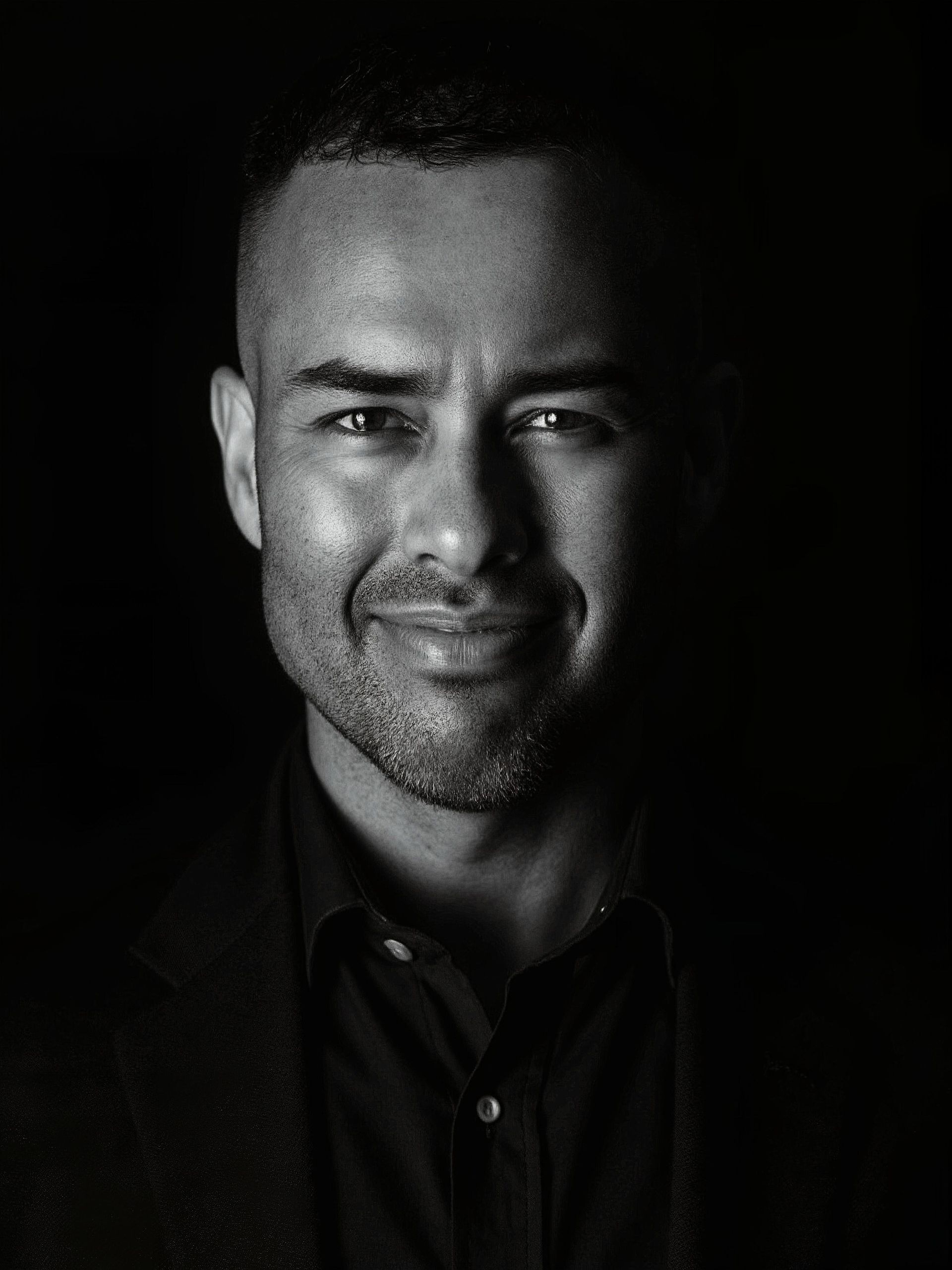
Hi, I’m Dr. Richard De La Garza, a Mexican American–Chicano Licensed Clinical Social Worker
I specialize in liberation-rooted support for veterans, military-connected individuals and families, with a particular commitment to BIPOC and LGBTQ communities.
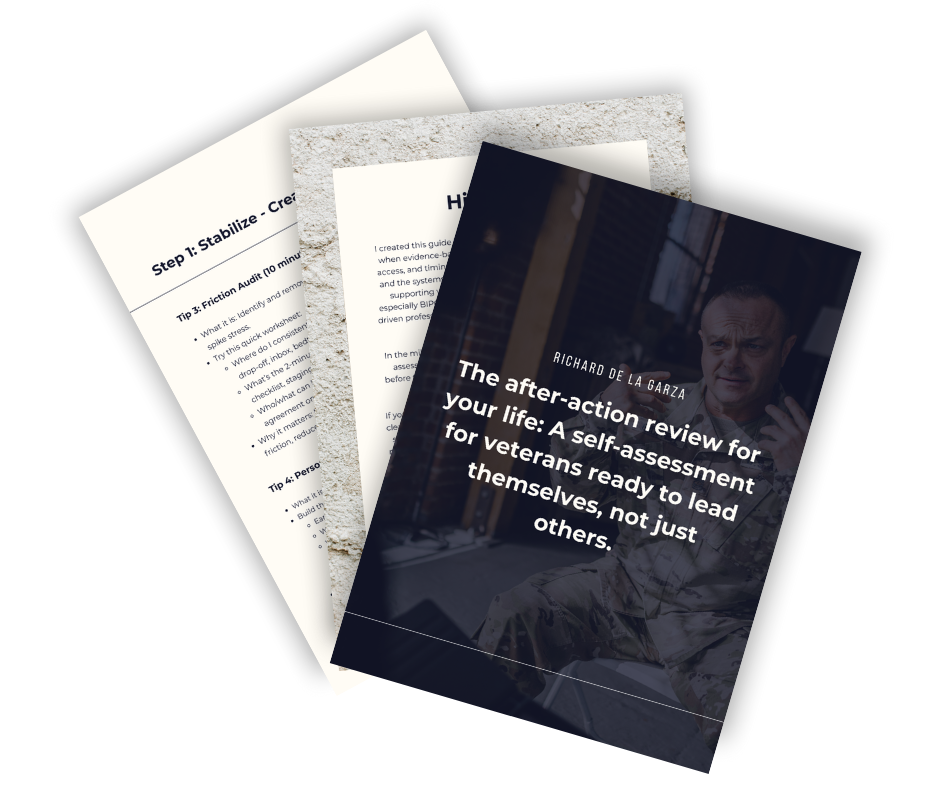
Investment & What’s Included:
I believe in being clear and transparent about pricing, so you know exactly what you’re saying “yes” to.
Complimentary Consultation
START NOWI offer a complimentary 15‑minute phone consultation. During this call, you’ll have the opportunity to share your needs and ask questions.
If you prefer, you can request a consultation via email using the contact form; however, I find that a brief verbal conversation often makes it easier to communicate what you’re looking for.
I invite you to ask about:
- The therapy process in general
- My therapeutic approach
- Payment and logistics
So you can make an informed choice about whether my services are the right fit for you.
- The therapy process in general
Option 1: Individual Session
START NOWInvestment:
- Telehealth (online): $250 per 50‑minute session
- In‑person (only in San Diego, CA): $300 per 50‑minute session
- Students (current full‑time with valid ID): $200 per 50‑minute session
The same 50‑minute session rate applies whether you are an individual, couple, or family.
Includes:
- One 50‑minute 1:1 session (online or in‑person), centered on your current needs and capacity
- Liberation‑rooted, nervous‑system‑informed support (not a one‑size‑fits‑all script)
- A brief post‑session summary with 1–3 grounded practices or reflections to explore
- An email check‑in within a week to support integration and answer clarifying questions
Option 2: Deep Dive Series (6 Sessions over 3 Months)
START NOWInvestment:
$1,500 for 6 sessions
(Payment plans available: 2-3 months, 4+ months
Includes:
- Six 50‑minute 1:1 sessions, scheduled over approximately 3 months
- A shared roadmap we co‑create, grounded in your values, goals, and capacity
- Freire‑inspired reflection + action practices tailored to your real‑life context
- Access to custom resources (handouts, nervous‑system exercises, journaling prompts)
- Brief email support between sessions for questions and check‑ins
- Six 50‑minute 1:1 sessions, scheduled over approximately 3 months
Payments
START NOWI do not accept insurance at this time.
I accept the following forms of payment:
- Major credit cards: Visa, MasterCard, American Express, Discover
- Cash, Apple Pay, Venmo, PayPal, and Zelle
- Checks and debit cards without a credit card feature are not accepted.
- No Surprises Act: You have the right to receive a Good Faith Estimate of what your services may cost.
- Major credit cards: Visa, MasterCard, American Express, Discover
FAQ
Is couples therapy confidential?
Yes. Therapy is confidential and protected under standard privacy laws. What you share stays between you and your therapist unless there is a specific safety concern or you choose to disclose it, which your therapist will explain up front.
What if my partner doesn't want to go?
It is common for one partner to feel unsure at first. You can still begin therapy individually with a focus on the relationship. Often, as clarity and progress build, the other partner may become more open to joining.
Will couples therapy affect my career or professional standing?
Seeking therapy does not negatively impact your career or professional standing. In fact, proactively addressing stress or relationship challenges is generally viewed as responsible and supportive of overall stability.
Does my partner need to have similar life experience to benefit?
No. Couples therapy is designed for relationships facing a wide range of challenges. Your partner does not need to share your specific background or history to benefit from the process.
Do we have to be married, or are same-sex couples eligible?
You do not have to be married. Therapy is open to couples in different types of relationships, including dating, long-term partnerships, and same-sex couples. The focus is on the relationship itself, not a specific structure.