Anger Control Counseling | Channel Leadership
Anger often carries important information, especially for veterans and military connected individuals who were trained to respond quickly, decisively, and under pressure. When that readiness no longer fits daily life, anger can show up as irritability, outbursts, shutdown, or tension that strains relationships and work. Anger control counseling here is designed for people who are tired of managing reactions and want steadier control over how they respond in real situations.
Many veterans experience anger alongside responsibility, competence, and leadership, which can make it harder to address without shame or self judgment. Explore the therapy for veterans service.
What is anger control counseling?
Anger control counseling is a structured, trauma informed approach that helps veterans and military connected individuals understand how anger operates in their bodies, thoughts, and daily behavior. Anger is not treated as a flaw or something to eliminate. It is viewed as a signal that something is overloaded, misaligned, or carrying unresolved pressure.
This type of counseling is important because anger in veterans is often misunderstood or mislabeled. Many people were trained to respond quickly under stress, make decisive calls, and suppress vulnerability. When those patterns continue in civilian life without the same structure or context, anger can surface in ways that strain relationships, disrupt work, or leave you feeling out of control or ashamed.
Most common symptoms related to anger control challenges
- Frequent irritability or short temper: You may feel easily annoyed, frustrated, or reactive, even in situations that did not bother you before.
- Anger that escalates quickly Small stressors can trigger intense reactions that feel hard to slow down or control once they start.
- Difficulty calming down after conflict Anger may linger long after an interaction ends, affecting mood, focus, and the rest of your day.
- Strained relationships Anger can lead to tension, withdrawal, or repeated conflict with family, partners, coworkers, or friends.
- Physical tension or agitation Tight muscles, headaches, clenched jaw, or restlessness are common physical signs of unresolved anger.
- Guilt or shame after outbursts Many people feel regret or self criticism after reacting in ways that do not align with their values.
- Avoidance or emotional shutdown In some cases, anger is turned inward, showing up as withdrawal, numbness, or avoidance rather than outward expression.
How do I know if anger control counseling could help me?
- Do I feel my reactions are stronger or faster than I intend? If anger shows up before you have time to think or choose how to respond, it may be a sign that stress is overriding regulation.
- Do small frustrations set me off more than they used to? When minor issues trigger disproportionate anger, it often points to accumulated pressure rather than the situation itself.
- Do I regret things I say or do when I am angry? Feeling guilt or shame after outbursts can indicate a gap between your values and your reactions.
- Does my anger affect my relationships or work? Repeated conflict, tension, withdrawal, or feedback from others may signal that anger is impacting areas of life that matter to you.
- Do I hold anger in and then shut down or withdraw? Anger does not always look explosive. Suppressing it can lead to numbness, isolation, or internal distress.
- Do I feel stuck between holding it together and losing control? Feeling unsure how to manage anger without suppressing it is a common reason people seek counseling.
Ready to get started?
Step 1: Grounded Intake & Shared Mapping
We start with a collaborative intake session where we slow down together, map what’s happening in your body and life, and name the systems, histories, and power dynamics that have shaped how you respond. This isn’t a checkbox assessment, it’s a Freirean dialogue where your story is treated as real knowledge, not a problem to be fixed.
Step 2: Freirean Praxis Sessions (Reflection + Action)
In ongoing 1:1 sessions, we practice praxis: we reflect critically on your patterns, triggers, and environments, and then translate that insight into small, concrete actions that honor your values and your nervous system. You’ll leave each session with 1–3 grounded experiments or practices, no perfectionism, no overwhelm, just doable steps toward more dignity, choice, and ease.
Step 3: Integration, Reclaiming, and Future Alignment
As we work, we regularly pause to reflect on what’s shifting: how you’re feeling in your body, how your relationships and boundaries are changing, and what freedom looks like for you now. Together, we refine your practices, celebrate what’s working, and craft a sustainable way of living and leading that’s aligned with your values, so the transformation isn’t just a session experience, but part of your everyday life.
Hello, I am Richard De La Garza, LCSW.

What topics can we talk about in therapy for anger control?
- Understanding what your anger is protecting We look at what sits underneath anger, such as overload, unmet needs, boundary violations, or accumulated stress, so reactions start to make sense rather than feel random.
- Interrupting automatic reactions Therapy focuses on slowing down the moment between trigger and response, helping you regain choice before anger takes over.
- Carrying responsibility without pressure buildup Many veterans hold themselves to constant readiness. We work on redistributing responsibility so anger does not become the outlet for exhaustion.
- Communication during conflict We build skills for expressing frustration, disagreement, or limits clearly without escalation, shutdown, or regret afterward.
- Boundaries with people and environments Anger often signals unclear or violated boundaries. Therapy helps you define and maintain limits that reduce repeated triggers.
- Physical signs of anger and stress We address how anger shows up in your body, such as tension, agitation, or restlessness, and develop ways to regulate before reactions escalate.
- Repairing relationships after anger episodes Therapy can support accountability, repair, and rebuilding trust without shame or self punishment.
Tips and resources for coping with anger
- Notice early physical cues Pay attention to tension in your jaw, shoulders, or chest. Catching anger early gives you more room to slow your response.
- Create pause points in your day Short breaks between tasks, conversations, or environments can prevent stress from stacking and triggering reactive anger.
- Reduce overstimulation Limiting constant noise, news, or digital input can lower baseline irritability and help your nervous system reset.
- Use movement to release built up tension Walking, stretching, or light physical activity can help discharge stress before it turns into anger.
- Clarify and protect your boundaries Identify situations or demands that consistently trigger anger and adjust expectations or limits where possible.
- Talking with someone you trust Naming frustration out loud with a safe person can reduce internal pressure and prevent anger from escalating.
- Seek structured professional support Working with a therapist who understands anger in veterans can help you develop practical tools that translate into daily life.

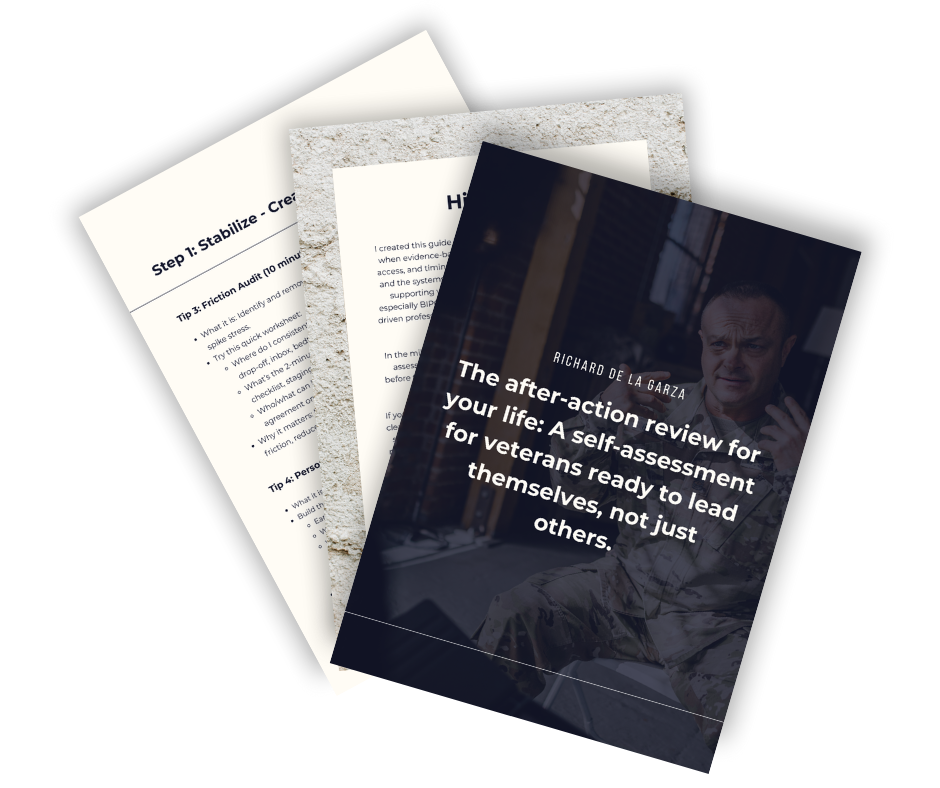
Hi, I’m Richard De La Garza, a Mexican American–Chicano Licensed Clinical Social Worker
I specialize in liberation-rooted support for veterans, military-connected individuals and families, with a particular commitment to BIPOC and LGBTQ communities.
Investment & What’s Included:
I believe in being clear and transparent about pricing, so you know exactly what you’re saying “yes” to.
Complimentary Consultation
START NOWI offer a complimentary 15‑minute phone consultation. During this call, you’ll have the opportunity to share your needs and ask questions.
If you prefer, you can request a consultation via email using the contact form; however, I find that a brief verbal conversation often makes it easier to communicate what you’re looking for.
I invite you to ask about:
- The therapy process in general
- My therapeutic approach
- Payment and logistics
So you can make an informed choice about whether my services are the right fit for you.
- The therapy process in general
Option 1: Individual Session
START NOWInvestment:
- Telehealth (online): $250 per 50‑minute session
- In‑person (only in San Diego, CA): $300 per 50‑minute session
- Students (current full‑time with valid ID): $200 per 50‑minute session
The same 50‑minute session rate applies whether you are an individual, couple, or family.
Includes:
- One 50‑minute 1:1 session (online or in‑person), centered on your current needs and capacity
- Liberation‑rooted, nervous‑system‑informed support (not a one‑size‑fits‑all script)
- A brief post‑session summary with 1–3 grounded practices or reflections to explore
- An email check‑in within a week to support integration and answer clarifying questions
Option 2: Deep Dive Series (6 Sessions over 3 Months)
START NOWInvestment:
$1,500 for 6 sessions
(Payment plans available: 2-3 months, 4+ months
Includes:
- Six 50‑minute 1:1 sessions, scheduled over approximately 3 months
- A shared roadmap we co‑create, grounded in your values, goals, and capacity
- Freire‑inspired reflection + action practices tailored to your real‑life context
- Access to custom resources (handouts, nervous‑system exercises, journaling prompts)
- Brief email support between sessions for questions and check‑ins
- Six 50‑minute 1:1 sessions, scheduled over approximately 3 months
Payments
START NOWI do not accept insurance at this time.
I accept the following forms of payment:
- Major credit cards: Visa, MasterCard, American Express, Discover
- Cash, Apple Pay, Venmo, PayPal, and Zelle
- Checks and debit cards without a credit card feature are not accepted.
- No Surprises Act: You have the right to receive a Good Faith Estimate of what your services may cost.
- Major credit cards: Visa, MasterCard, American Express, Discover
FAQ
What causes anger problems after military service?
Many veterans experience anger linked to combat stress, hypervigilance, moral injury, or difficulties adjusting to civilian life. Anger is often a secondary response to deeper issues such as PTSD, depression, or unresolved grief, all of which can be addressed through therapy.
Can anger management counseling help with relationships or family conflict?
Absolutely. Counseling teaches communication skills, emotional regulation, and stress response tools that reduce conflict at home. Many VA centers also offer couples or family counseling so loved ones can learn how to support emotional recovery.
Is anger counseling confidential within the VA?
Yes. All VA anger management and mental health services are confidential and protected by HIPAA. Information is only shared if there’s a serious safety concern or you consent to include family or care partners in your sessions.
Why do I feel angry or irritable even when I’m not in stressful situations?
Chronic hypervigilance and stress responses from military service can keep your nervous system on high alert, even in calm environments. This often shows up as irritability or frustration without a clear trigger. Counseling and mindfulness-based therapies can retrain your body to feel safe again and respond calmly instead of reactively.
Is anger a sign of PTSD or depression in veterans?
Yes, anger can often be a symptom of underlying PTSD, depression, or anxiety. For many veterans, anger acts as a protective response to fear, guilt, or emotional pain. VA counselors help identify whether anger is a stand-alone issue or part of a deeper condition, and tailor treatment accordingly through trauma-informed therapy.